What one MemoHoney capsule holds: the Supplement Facts panel transcribed, how to read its two kinds of lines, what each ingredient is, and an NIH source for every line on the label.

Editorial disclosure: memohoneyguide.com is an independent guide and is not the manufacturer, distributor or seller of MemoHoney. It contains affiliate links, and we may earn a commission if you purchase through them, at no extra cost to you. These statements have not been evaluated by the Food and Drug Administration. MemoHoney is not intended to diagnose, treat, cure, or prevent any disease. Consult a healthcare professional before use.
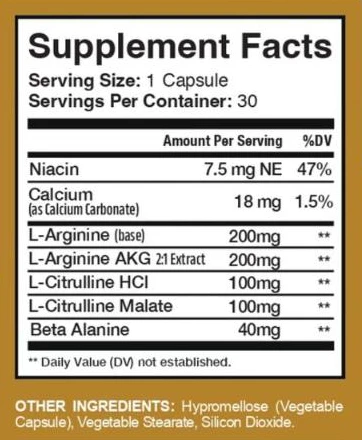
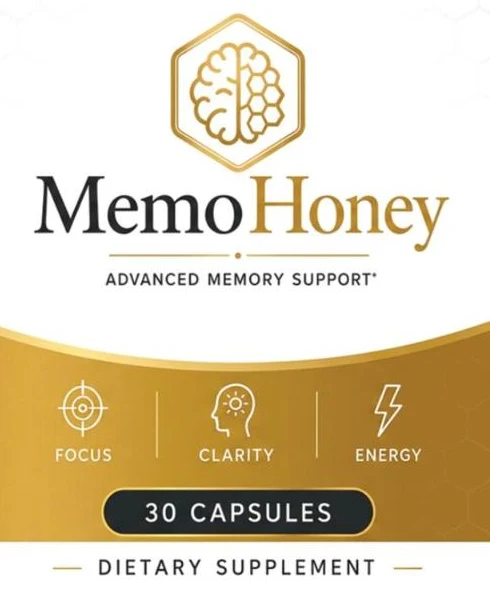
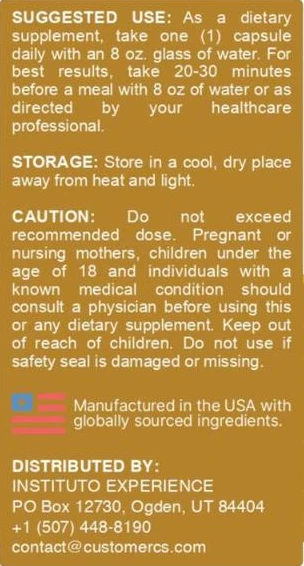
One capsule is one serving, and a bottle holds 30 servings. The table is the panel as printed. Below it are photos of the three label panels, so you can compare them with the bottle in your hand.
| Serving size | 1 capsule |
|---|---|
| Servings per container | 30 (30 capsules per bottle) |
| Niacin | 7.5 mg NE (47% DV) |
| Calcium (as calcium carbonate) | 18 mg (1.5% DV) |
| L-Arginine (base) | 200 mg (Daily Value not established) |
| L-Arginine AKG 2:1 Extract | 200 mg (Daily Value not established) |
| L-Citrulline HCl | 100 mg (Daily Value not established) |
| L-Citrulline Malate | 100 mg (Daily Value not established) |
| Beta Alanine | 40 mg (Daily Value not established) |
| Other ingredients | Hypromellose (vegetable capsule), vegetable stearate, silicon dioxide |
| Suggested use | "As a dietary supplement, take one (1) capsule daily with an 8 oz. glass of water. For best results, take 20-30 minutes before a meal with 8 oz of water or as directed by your healthcare professional." |
| Storage | "Store in a cool, dry place away from heat and light." |
| Caution | "Do not exceed recommended dose. Pregnant or nursing mothers, children under the age of 18 and individuals with a known medical condition should consult a physician before using this or any dietary supplement. Keep out of reach of children. Do not use if safety seal is damaged or missing." |
| Origin | "Manufactured in the USA with globally sourced ingredients." |
| Distributed by | Instituto Experience, PO Box 12730, Ogden, UT 84404 · +1 (507) 448-8190 · contact@customercs.com |
Crops of the wrap label shown on the official order page. See the full label.
Niacin and calcium are nutrients with a Daily Value, so they get a percentage: 47% and 1.5%. The five amino acid lines have no Daily Value, so the label marks them "**".
Arginine appears twice, as the base form and as "L-Arginine AKG 2:1 Extract". Citrulline also appears twice, as HCl and as malate. Each form is listed and weighed on its own line: 400 mg of arginine forms and 200 mg of citrulline forms in all.
The weight of a salt form includes its partner molecule. ODS gives the example of citrulline malate, which is 56.64% citrulline by weight, so 100 mg of it holds about 57 mg of citrulline. The citrulline malate guide explains the arithmetic.
ODS describes L-arginine as an amino acid found in many protein-containing foods, especially animal products and nuts. The body also makes it from citrulline, mainly in the kidneys. The studies ODS reviews used far larger amounts, most often 2 to 10 g a day.
NIH ODS: arginineA second form of arginine, paired with AKG (alpha-ketoglutarate). The label gives the ratio as 2:1 but does not say how much of the 200 mg is arginine itself. Together with the base form, the capsule lists 400 mg of arginine ingredients.
NIH ODS: arginineODS calls L-citrulline a nonessential amino acid that the body makes, mainly from glutamine, and also gets from food. About 80% of the body's citrulline is converted into arginine in the kidneys. Watermelon is the best-known source: one cup of diced seedless watermelon has about 365 mg.
NIH ODS: citrullineCitrulline bound to malate. ODS gives its composition as 56.64% citrulline by weight. The citrulline malate guide covers the form in detail.
NIH ODS: citrulline malateODS describes beta-alanine as an amino acid the body does not build into proteins. It is the rate-limiting precursor of carnosine, produced in the liver, with small amounts in meat, poultry and fish. Studies used 1.6 to 6.4 g a day, so 40 mg is far below that range. The beta-alanine guide has more.
NIH ODS: beta-alanineVitamin B3, one of the water-soluble B vitamins. The Daily Value is 16 mg, and the adult RDA is 16 mg NE for men and 14 mg NE for women. Poultry, beef and fish give about 5 to 10 mg per serving. The label does not say which form of niacin is used.
NIH ODS: NiacinAs calcium carbonate. ODS gives calcium carbonate as 40% calcium by weight and says calcium from supplements is absorbed better with food. The adult RDA is 1,000 mg (ages 19 to 50).
NIH ODS: CalciumThe NIH fact sheet on arginine, citrulline and beta-alanine reviews them for exercise and athletic performance, at amounts measured in grams. It does not cover a capsule like this one or the claims on its label. No published study of MemoHoney itself was found.
NIH ODS: exercise and athletic performance"Hypromellose (Vegetable Capsule), Vegetable Stearate, Silicon Dioxide." These are the capsule shell and two common processing aids.
The official website speaks of "6 vital nutrients" and does not mention the calcium. The label lists seven lines. Go by the label on your bottle, and check the official order page for any changes.
Per capsule: niacin 7.5 mg NE, calcium (as calcium carbonate) 18 mg, L-arginine (base) 200 mg, L-arginine AKG 2:1 extract 200 mg, L-citrulline HCl 100 mg, L-citrulline malate 100 mg and beta alanine 40 mg. Other ingredients: hypromellose (vegetable capsule), vegetable stearate and silicon dioxide.
Two lines add up to 400 mg: 200 mg of L-arginine base and 200 mg of L-arginine AKG 2:1 extract. The label does not say how much arginine the AKG form holds.
200 mg of citrulline forms: 100 mg L-citrulline HCl and 100 mg L-citrulline malate. ODS gives citrulline malate as 56.64% citrulline by weight.
No. Every ingredient is printed with its own amount.
No. Honey does not appear on the label.
No caffeine or other stimulant is listed.
The official website names six nutrients: the two arginines, the two citrullines, niacin and beta-alanine. The label adds calcium as a seventh line. Go by the label on your bottle.
The official order page shows the full wrap label as one image, and this page reproduces it with crops of each panel. The official order page is the place to check for changes.
Each MemoHoney bottle holds 30 capsules, a month at one a day. Orders of 3 or 6 bottles ship free, and every order from the official page carries a 60-day money-back guarantee. The MemoHoney buying guide walks through the order and the refund steps.
Visit the Official MemoHoney PageThis site uses Google Analytics cookies to count visits. See the privacy policy.